 Owoeye Jesuloba Grace
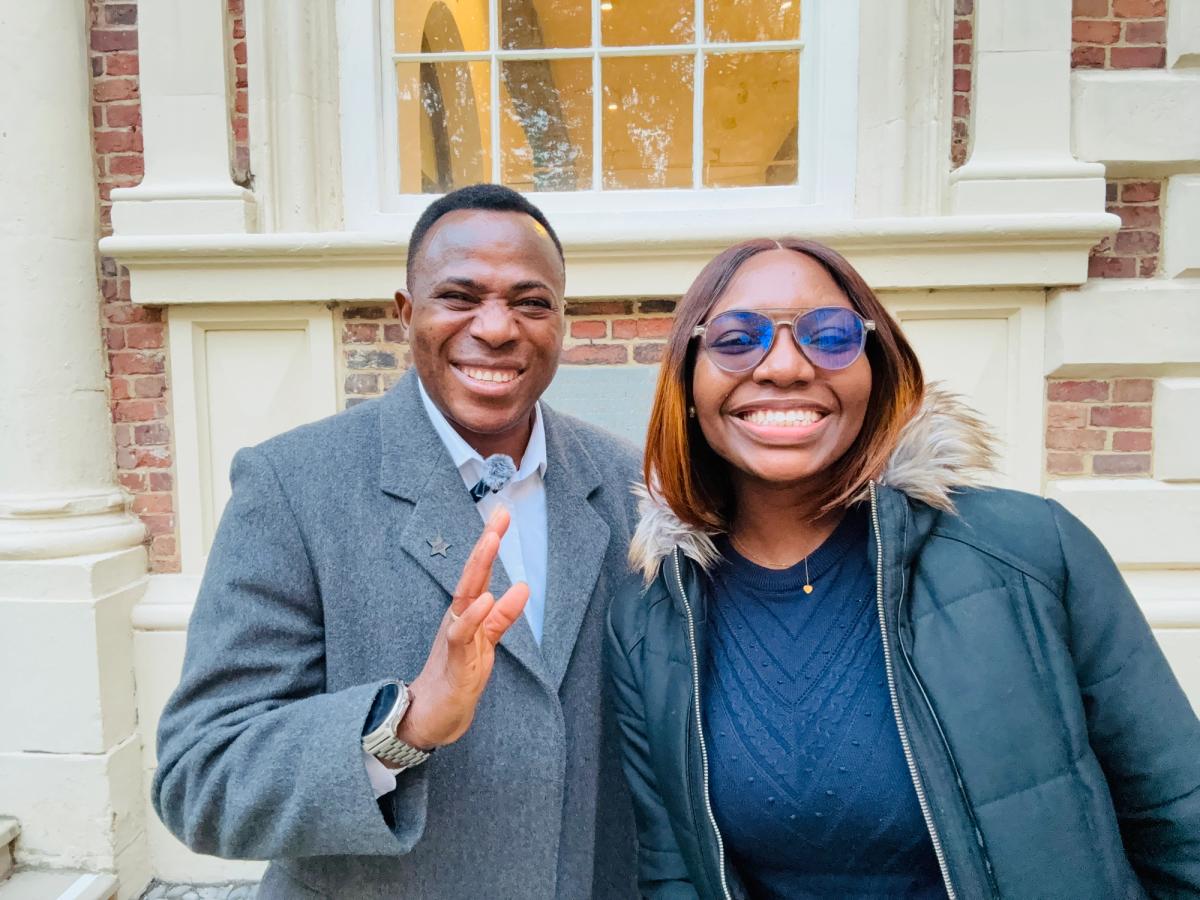
An evening of jollof rice, warm drinks, and the extraordinary kindness of a man who knows what it means to have nowhere to go.
There was jollof rice.
Not a little portion tucked away somewhere, but a large bag filled with packs of jollof rice and chicken. As a Nigerian, I know what goes into preparing a meal like that, and I found myself staring.
There was tea, coffee, hot chocolate, blankets and sleeping mats. It was freezing in Liverpool that evening, the kind of cold that makes you wonder why anybody would willingly remain outdoors longer than necessary.
Yet Oladele Dada was smiling.
Oladele said something that I haven't stopped thinking about: “You don't need to be rich to help. You just need to be good to help.”
I had heard about his outreach through Nehemiah Hands Global and asked when the next one would take place. I wanted to see it for myself. That's how I approach Gems of Liverpool. I don't want to tell stories about places and people I've only encountered through somebody else's account. I want to be there. To observe. To ask questions. To experience something of what I'm inviting others to see.
And that evening, I saw more than I expected.
People approached Oladele with the familiarity of old friends. Some hugged him. There was laughter, conversation and a warmth that had very little to do with the temperature.
People came for food, certainly. Some appeared to be sleeping rough; others simply saw an opportunity for a meal. Nobody seemed particularly interested in making a spectacle of the distinction.
I kept looking at the food, the supplies, the people helping.
Who was paying for all of this?
Oladele explained that he contributed from his own earnings. His wife helped, and a few other people supported the work when they could.
I was astonished.
And then he told me something that changed how I understood the evening.
There had been a time when Oladele himself was homeless.
Following the breakdown of his first marriage, his life had taken a difficult turn. He had slept rough in London, experiencing the uncertainty and indignity of having nowhere secure to call home.
The man standing before me, making sure other people had something warm to eat, knew what the pavement felt like.
I thought about the people embracing him.
Perhaps what they recognised wasn't simply a man bringing food, but somebody who understood a language that cannot easily be taught. The language of having needed help. Of being overlooked. Of knowing what it means when someone stops long enough to ask how you're doing.
Oladele told me that the outreach gave him tremendous happiness. For him, it was about much more than food.
I could see that.
It was in the way he spoke to people, the ease of the conversations, the pleasure he took in being there. His own experiences had not made him indifferent to other people's suffering. They seemed to have made him more determined to respond.
And he wasn't waiting to become extraordinarily wealthy before doing something.
He was doing what he could, with what he had, alongside people willing to help.
One of the things that stayed with me was his hope for the people he met. He didn't speak about them as though their present circumstances were the sum of their lives. He imagined them finding stability, rebuilding and going on to do things nobody looking at them today might expect.
That matters.
Because it is possible to look at somebody sleeping on the street and see only homelessness.
Oladele sees a person. And perhaps, sometimes, he sees something of the man he once was.
By the time I left, Liverpool was still cold. The streets were still busy, and the problems that brought people to that outreach had not disappeared.
But there had been jollof rice. Chicken. Hot drinks. Blankets. People calling one another by name.
And a man who once had nowhere to sleep had spent part of his evening making sure other people knew they hadn't been forgotten.
Connected in the archive
Keep following it. Every entry opens onto the next.