 Owoeye Jesuloba Grace
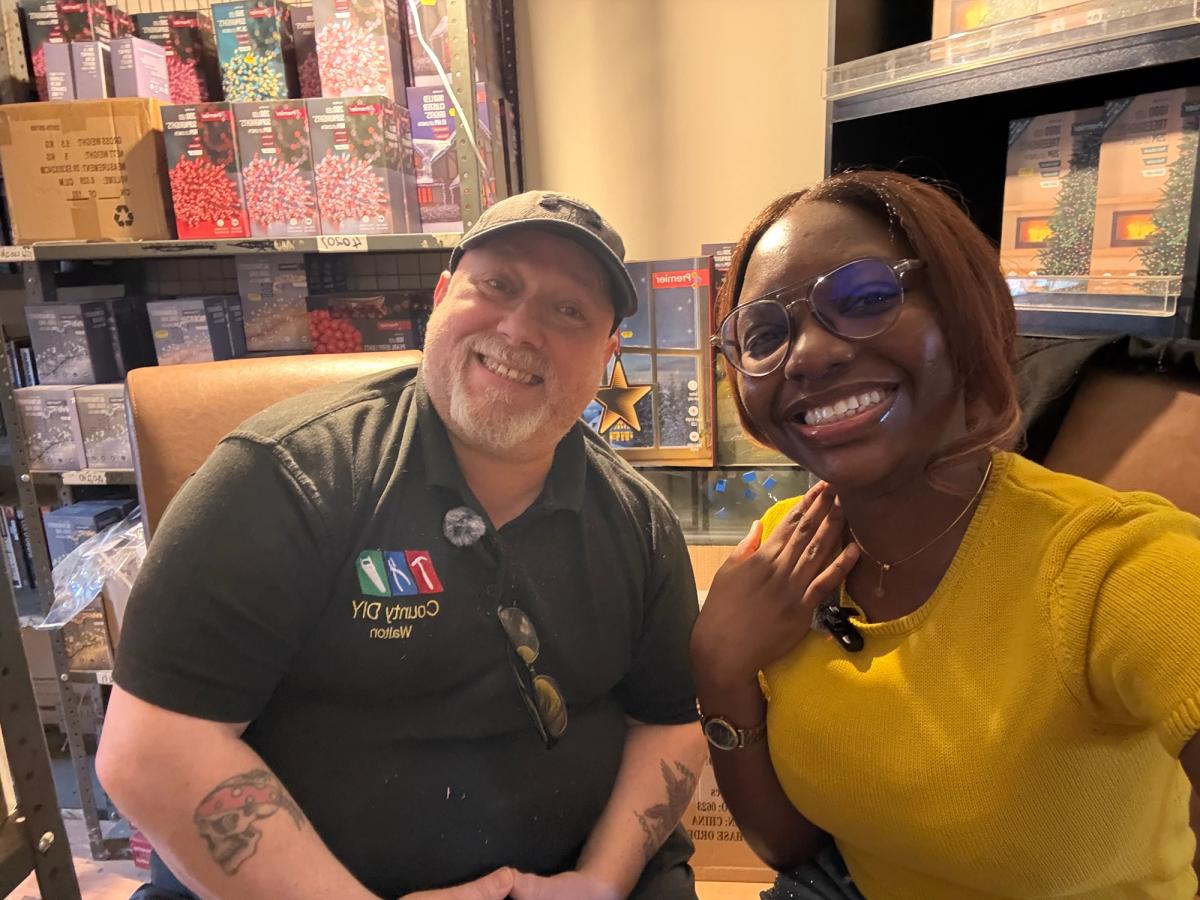
“Will I marry you? I'm sorry, I can't. I'm already married.”
I was in the middle of asking Kenny a question when he interrupted me with this completely unsolicited announcement.
I looked up from my notes and burst out laughing.
“Kenny, you're too old for me!”
And there he was, laughing too. A man in his fifties, perhaps, with the mischief of somebody who has absolutely no intention of growing old in spirit.
This is Kenny.
And if you've ever walked into County DIY on County Road in Walton, there's a good chance you've encountered some version of this man. Laughing, joking, helping somebody find a tool, solve a problem, cut a key, or leave with a little more cheer than they arrived with.
I met him because I kept losing my keys.
Not once. Not twice. Enough times that County DIY became a familiar stop in my life. I would walk in needing another copy, and there would be a member of staff, ready to help.
I had no idea then that the man who owned the shop where I cutting my keys had spent thirty-two years on that same road.
Thirty-two years!
Longer than I've been alive.
He first walked through the doors of County DIY as an intern. In time, he became the manager. Today, he owns the place, having taken over the business eight years ago.
The same shop. The same road. Three different versions of one man's life.
And while Liverpool has been changing around him, Kenny has been watching.
He's seen children grow into teenagers, teenagers become adults, and families return through the years. He's watched shops open, flourish and disappear. He's known people whose circumstances changed for the better and others whose stories did not end so happily.
He remembers people who lived on the streets. One man he saw struggling eventually found his feet again. Another didn't.
These are the things a city carries, even when nobody thinks to write them down.
And Kenny carries some of them too.
There is something remarkable about remaining in one place long enough to witness generations pass through it. The street becomes more than a collection of buildings. You begin to know its people, its rhythms, its losses and its little victories.
You become part of its memory.
But what fascinates me most about Kenny isn't simply how long he has stayed.
It's the kind of man he has chosen to be while staying.
Kenny has known illness. He has spoken openly about his experience of cancer, about what it means to confront something that threatens the ordinary certainty of tomorrow.
And yet, when you meet him, you don't meet a man who has allowed his hardest experiences to become the only thing there is to know about him.
You meet laughter.
You meet humour.
You meet someone who seems genuinely pleased to see people.
He is the kind of person whose presence feels like a breath of fresh air.
Not because life has been particularly gentle with him, but because he has somehow remained gentle with people.
I find that deeply moving.
There are people who go through difficult things and become closed off from the world. And then there are people like Kenny, who have endured their own share of hardship and still find ways to extend a hand to somebody else.
Sometimes, that hand is helping you find the right tool.
Sometimes, it's cutting yet another key because you've somehow misplaced the last one.
And sometimes, it's simply making you laugh.
These days, when I visit the shop, there is often another reason for Kenny's excitement.
His granddaughter.
He is completely besotted with her.
He'll bring out photographs, show me what she's been up to, and we'll laugh together. There is a particular delight in watching a grown man become so thoroughly enchanted by a little girl.
And I think about what she will come to know of him.
The grandfather who adores her. The man who can turn an ordinary conversation into a joke. The man who has spent decades on County Road, collecting stories without necessarily realising he was doing so.
Perhaps one day, she'll watch this film and see a version of her grandfather she hadn't yet had the chance to know.
That possibility alone makes me glad I picked up my camera.
Because when I first decided to interview Kenny, I didn't have a grand production team or a complicated filming arrangement.
I had a camera, a microphone, a tripod and a lunch break.
I ran down to the shop, set everything up, and we talked.
And somewhere between his jokes, his memories and the ordinary interruptions of a working day, a much bigger story began to emerge.
Not just the story of a man who started as an intern and became the owner.
The story of somebody who has stayed.
Somebody who has watched a neighbourhood change and continued to serve the people within it.
Somebody who has lived through things that might have made him retreat from the world, but who still meets that world with laughter.
We talk a great deal about the people who build cities. We remember architects, politicians, business leaders and the names attached to important buildings.
But there are other people who hold a city together in ways that rarely make the headlines.
The people behind counters. The familiar faces on ordinary streets. The ones who remember your parents, recognise your children and notice when somebody hasn't been around for a while.
People like Kenny.
And perhaps that's why this story means so much to me.
I came to Liverpool looking for a place to belong. Somewhere along the way, I began meeting people who had spent decades making that belonging possible for others.
Kenny is one of them.
The funny thing is, I walked into his shop because I couldn't stop losing my keys.
I went looking for a way back into my house.
I didn't know I was about to meet a man who had spent thirty-two years keeping a little part of Liverpool open to the people who needed him.
And now, whenever I walk through that door, I know I'm likely to leave with more than I came for.
A conversation. A laugh. Another photograph of his granddaughter.
And, if I've been particularly careless, yet another key.
Some doors are worth walking through, even when you haven't lost your keys.
Keep following it. Every entry opens onto the next.