 Owoeye Jesuloba Grace
The Woman Who Wouldn't Let It Slide
A bus driver was unnecessarily rude to me in front of everyone. I was ready to let it go. But an elderly Scouse woman sitting beside me had other plans.

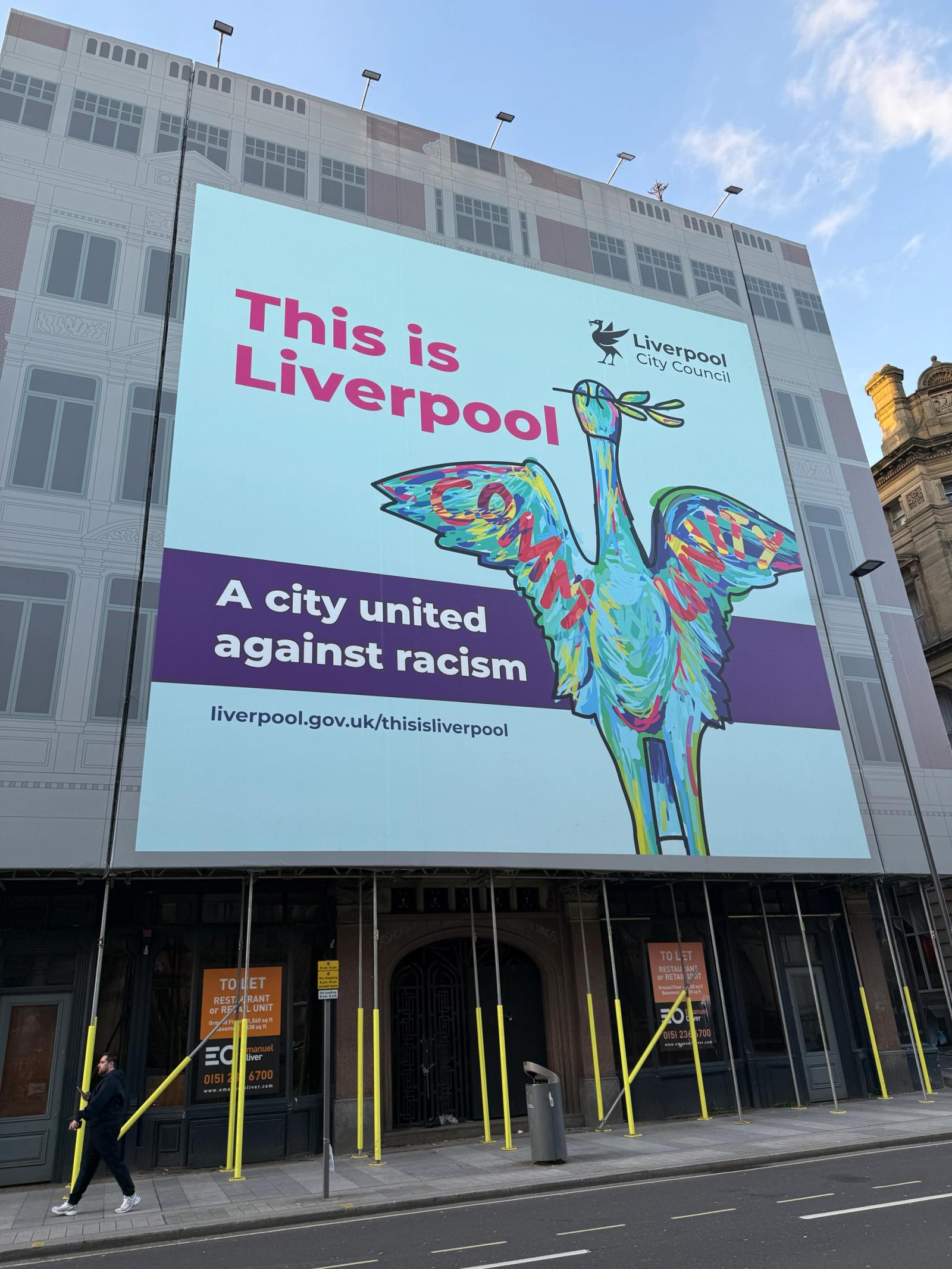
I have a thing for elderly people.
I don't know if it's the years they've lived, the stories they carry, or the fact that some of them have reached an age where they seem to have very little patience for nonsense.
But I find myself drawn to them.
And one particular day in Liverpool, an elderly woman gave me a reason to love them even more.
It started with a bus ride.
I'd left home and was heading somewhere, minding my business, as one does.
The bus approached, and I signalled for it to stop.
Nothing unusual, right?
Except that when I got on, the driver seemed to have a problem with me.
I couldn't quite understand what had upset him. Perhaps he was going to stop anyway and didn't appreciate my signalling. Perhaps something else had happened before I arrived.
Whatever it was, he was visibly irritated.
He growled at me, brushed off my attempts to understand what was wrong, and spoke to me in a manner I found unnecessarily rude.
And all of this happened in front of other passengers.
You know that feeling when somebody is being unpleasant to you in public, and you're standing there trying to understand what exactly you've done to deserve it?
That was me.
I was embarrassed.
Not because I believed I'd done something wrong, but because the whole exchange felt so unnecessary.
Eventually, I found a seat.
I decided that perhaps he was simply having a bad day. It happens. We all have those days when life is doing a little too much.
Still, I remember thinking that having a bad day doesn't give us permission to make somebody else's day miserable.
Especially when your work involves interacting with people.
Anyway, I sat down, ready to put the whole thing behind me.
But the elderly woman beside me was having none of it.
Some things should not be overlooked
"That was very rude," she said.
She was referring to the driver.
And before I knew it, she was expressing her displeasure about the way he'd spoken to me.
“I didn't ask her to stand up for me. She did it anyway.”
She talked about how things hadn't always been like that, how people ought to feel welcome and how such behaviour could make others uncomfortable.
I was touched, but I tried to reassure her.
I told her I thought he might simply be having a bad day. Not that it excused his behaviour, of course, but I didn't want the encounter to become something bigger than it needed to be.
I smiled, thanked her, and carried on with my journey.
As far as I was concerned, that was the end of it.
Apparently, I was the only one who thought so.
Because when we eventually reached our stop, and it was time to get off, this woman marched straight towards the driver.
Ah!
She confronted him about the way he'd treated me.
She wasn't interested in pretending nothing had happened. She made it clear that his behaviour was unacceptable and that he had no business speaking to passengers like that.
I stood there watching.
Surprised.
Amused, if I'm being truthful.
But mostly, deeply moved.
Because this woman didn't know me.
We hadn't met before that journey. She didn't know my name, where I was going or anything about my life.
All she knew was that she'd witnessed something she believed was wrong.
And she wasn't going to ignore it.
There is a difference between noticing and speaking up
I've thought about that encounter many times since.
And one thing I want to be careful about is the conclusion I draw from it.
I don't know why the driver behaved the way he did.
I cannot say that he was being racist towards me, because he made no racial remark, and I have no evidence that race had anything to do with it.
What I experienced was rudeness. Unnecessary, public and embarrassing rudeness.
But what I witnessed afterwards was something much more memorable.
A stranger choosing not to remain silent when she believed somebody had been treated unfairly.
And that distinction matters to me.
It's easy to say we believe in kindness, fairness, and treating people with dignity.
It's another thing to practise those values when doing so requires us to speak.
Sometimes, standing up for another person is uncomfortable. Sometimes, it interrupts your day. Sometimes, it means confronting someone when it would be much easier to walk away.
This woman could have simply shaken her head, offered me a sympathetic smile and continued with her journey.
Honestly, that alone would have meant something to me.
But she went further.
And I think there's something worth learning from that.
The Liverpool I hope we continue to build
Sometime after that experience, I had a conversation with Edna Boampong, Director of Communications and Engagement in Liverpool City Council whom I consider one of Liverpool's chief storytellers.
We spoke about the city, its people, and the importance of building communities where everyone feels welcome.
One thing that stayed with me was our discussion about anti-racism.
There is a difference between simply saying, "I'm not racist," and actively challenging racism when we encounter it.
The first describes a personal position.
The second asks something of us.
It asks whether we're willing to question harmful behaviour, challenge prejudice, and help create environments where people feel safe and valued.
And although I wouldn't label my experience on that bus as racism, the elderly woman's response reminded me of the importance of not being indifferent to another person's mistreatment.
I also think about a conversation I had with Walid Bentarcha, who came to Liverpool from Algeria.
He told me that in the five years he'd lived here, he hadn't personally experienced racism.
I remember finding that encouraging, particularly because he spoke with such affection about the welcome he'd received.
Of course, his experience cannot speak for everyone. No single person's story can.
But he expressed a hope that, thirty years from now, Liverpool would remain a city where people from different backgrounds could feel welcome.
And I share that hope.
Because a welcoming city isn't simply one that describes itself as friendly.
It's one where people are willing to make that friendliness real.
In the way they treat strangers.
In the way they respond when somebody is uncomfortable.
And sometimes, in the way they speak up when another person is being treated poorly.
To the woman on the bus
I never got her name.
I don't know whether she remembers the encounter or whether, for her, it was simply another ordinary day.
But I remember.
I remember how embarrassed I'd felt when I boarded that bus.
And I remember how seen, heard, and valued I felt when somebody decided I didn't deserve to be treated that way.
I have often heard people describe Scousers as passionate.
Well, that day, I met a particularly passionate one.
An elderly woman who saw something she didn't like and decided that keeping quiet wasn't an option.
She reminded me that sometimes kindness isn't soft-spoken.
Sometimes kindness has a backbone.
Sometimes it raises its voice.
And sometimes it looks like an elderly woman marching towards a bus driver to give him a piece of her mind.
I hope my generation carries some of that courage.
The willingness to care about what happens to people beyond ourselves. To speak when something is wrong. To make room for others to feel safe, respected, and welcome.
I didn't ask that woman to defend me. She gave me that kindness freely.
And for that, I'm grateful.
With love,
Jesuloba Grace.